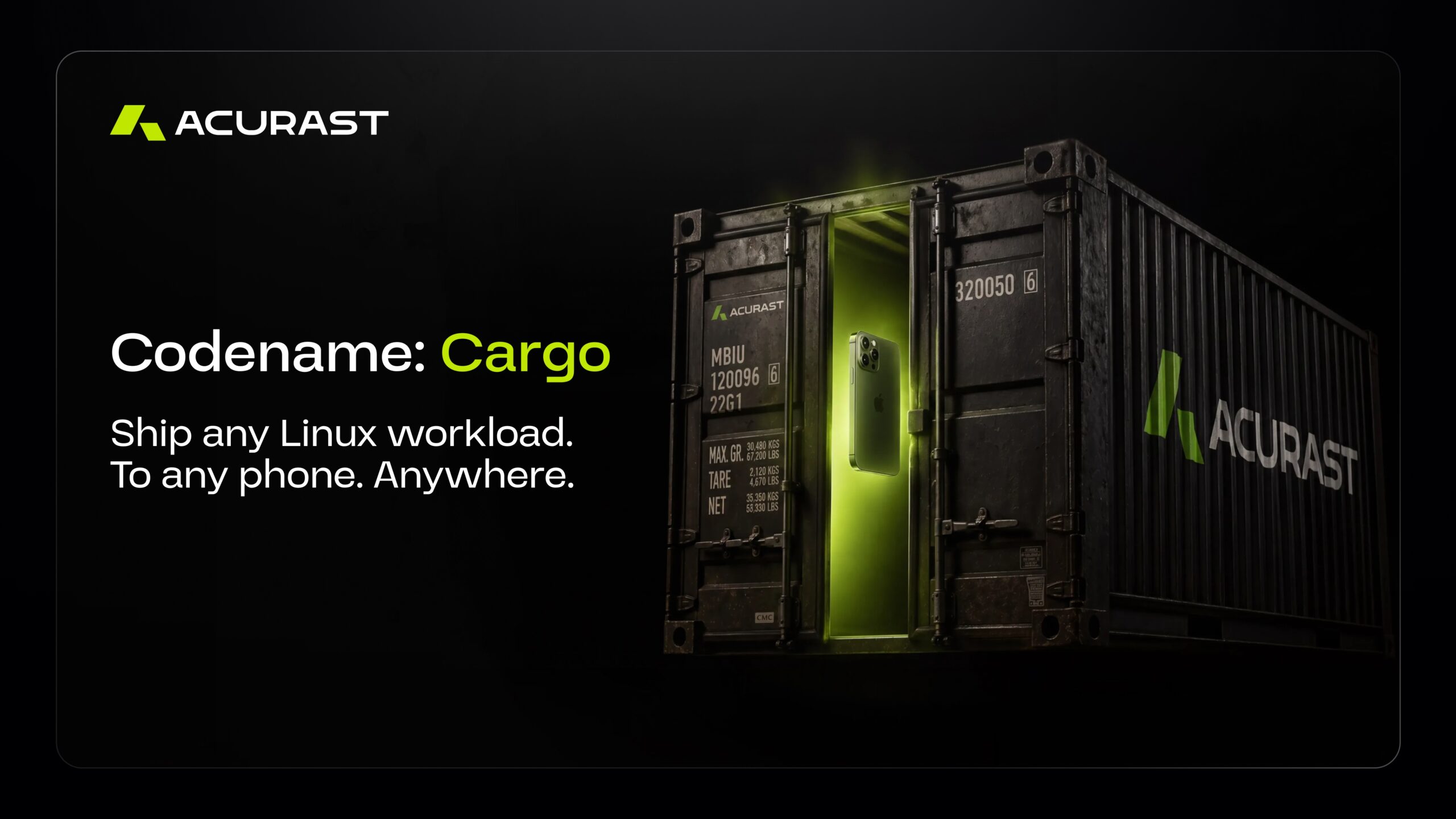
Codename: Cargo, 이제 Canary에서 사용 가능
Acurast Canary에서 Cargo 출시: 제약 없이 무엇이든, 어디에든 배포하세요
추크, 4월 27일 — Acurast가 오늘 Canary 네트워크에서 Cargo를 출시합니다. Cargo는 모바일 엣지를 위해 설계된 Linux 기반 컨테이너 모델로, 1월 메인넷 출시 이후 가장 중요한 아키텍처 업그레이드입니다.
Cargo를 사용하면 개발자는 Linux에서 실행되는 모든 워크로드를 증명(attestation)을 거친 Acurast의 Android 스마트폰 네트워크에 배포할 수 있습니다. Python, Go, Rust, C++, 셸 스크립트, 완전한 바이너리까지 가능합니다. Linux용으로 빌드된다면 Acurast에서 실행됩니다.
이번 업그레이드로 탈중앙화 모바일 컴퓨팅은 “JavaScript 워크로드에나 흥미로운 것”에서 거의 모든 개발자에게 중앙화된 클라우드의 실질적인 대안으로 거듭납니다.
Cargo — Canary에서 사용 가능
모든 Linux 워크로드
Python. Go. Rust. C++. Linux에서 실행된다면 Acurast에서 실행됩니다.
모바일 컴퓨팅이 안고 있던 컨테이너 문제
Docker, Kubernetes를 비롯한 기존 컨테이너 생태계는 특정한 종류의 호스트를 위해 만들어졌습니다. 예측 가능한 RAM, 결정적인 네트워킹, 균일한 하드웨어를 갖추고 항상 온라인 상태인 동질적이고 고성능인 서버입니다. 휴대폰은 그 어느 것에도 해당하지 않습니다.
휴대폰은 깨어났다가 잠들기를 반복합니다. 네트워크는 바뀝니다. 하드웨어는 칩셋, TEE 구현, OS 버전, 증명 기능에 따라 천차만별입니다. 데이터 센터를 위해 설계된 컨테이너 모델은 일반 소비자용 스마트폰 네트워크에서 실행하려는 순간 무너집니다.
Cargo는 이러한 이질성을 해결하기 위해 처음부터 새로 만든 최초의 컨테이너 모델입니다. 워크로드가 전달되기 전에 Acurast 네트워크는 엄격한 증명 절차를 실행해 휴대폰의 하드웨어 성능, OS 무결성, 하드웨어 기반 보안 실행 지원 여부를 검증합니다. 이를 통과한 휴대폰만 작업을 받습니다.
Acurast가 Node.js 워크로드를 위해 구축한 증명 인프라가 이제 분산된 휴대폰 네트워크에서 완전한 Linux 컨테이너를 가능하게 하는 바로 그 인프라입니다. 수년간의 프로토콜 엔지니어링이 컨테이너 레이어에서 결실을 맺고 있습니다.
“Linux에서 실행된다면 Acurast에서 실행됩니다.”
Cargo가 개발자에게 열어 주는 것
언어 선택의 자유
Acurast는 더 이상 JavaScript 네트워크가 아닙니다. Python, Go, Rust, C++ 또는 Linux 툴체인이 있는 어떤 언어든 배포하세요. 컴파일된다면 배포됩니다.
VPS와 같은 개발자 경험
배포에 SSH로 접속하세요. 로그를 읽으세요. 실시간으로 디버깅하세요. Cargo는 블랙박스 함수 런타임이 아닙니다. 세계 어딘가에 있는, 증명을 거친 Android 스마트폰에서 실행되는 실제 Linux 환경입니다.
Linux 생태계에 즉시 접근
Linux에서 실행되는 모든 패키지, 모든 라이브러리, 모든 바이너리를 첫날부터 사용할 수 있습니다. 별도의 수동 지원이 필요하지 않습니다. Linux가 지원하는 순간 Acurast도 지원합니다.
빌더에게 실질적인 의미는, 기존 클라우드에 배포하던 거의 모든 것(백엔드 API, 예약 작업, ML 추론 엔드포인트, 에이전트 런타임)을 이제 Acurast에 배포할 수 있다는 것입니다. 워크플로는 같습니다. 신뢰 모델은 전혀 다릅니다.
참고: Cargo 컨테이너는 Acurast 네트워크의 Android 휴대폰에서 실행됩니다. iOS 기반 Acurast 프로세서는 이전과 마찬가지로 JavaScript 워크로드에 참여합니다.
기본적으로 기밀 보장
Cargo를 저렴한 VPS와 다르게 만드는 특성은 가격이 아닙니다. 프라이버시입니다.
Cargo 컨테이너는 실행될 때 스마트폰의 보안 요소(secure element) 안에서 실행됩니다. 운영 체제조차 들여다볼 수 없는 하드웨어 하위 시스템입니다. 컨테이너에 로드된 데이터, 그 데이터에 대해 수행된 연산, 중간 상태, 그 어느 것도 휴대폰 소유자나 OS, 외부에서 휴대폰을 관찰하는 누구도 읽을 수 없습니다. 작업이 완료되면 결과가 반환되고 원본 데이터는 파기됩니다.
이는 하이퍼스케일러 인프라에서는 한 번도 마음 편히 처리할 수 없었던 두 가지 유형의 작업을 가능하게 하는 결정적인 열쇠입니다.
첫 번째는 민감한 입력이 있는 워크로드입니다. 의료 기록, 재무 모델, 독점 데이터 세트, 규제 체계상 보안 경계를 벗어나서는 안 되는 사용자 데이터 등입니다. Cargo를 사용하면 인프라 운영자에게 데이터를 노출하지 않고도 해당 데이터에 대한 연산을 실행할 수 있습니다.
두 번째는 AI 에이전트 런타임입니다. 자율 에이전트가 더 많은 책임을 맡게 되면서, 에이전트가 어디에서 실행되는지는 보안의 문제가 됩니다. 중앙화된 인프라에서 실행되는 에이전트는 호스트 제공업체에게 자신이 수행하는 모든 행동, 처리하는 모든 컨텍스트, 다루는 모든 자격 증명을 보여 주게 됩니다. 새롭게 떠오르는 에이전트 경제 대부분에서 이는 받아들일 수 없는 일입니다. Cargo는 호스트조차 들여다볼 수 없는 환경에서 에이전트를 실행하는 인프라입니다.
“기본적으로 기밀. 아키텍처로 보장되는 프라이버시.”
참여 승인 레이어
Cargo의 보장은 엄격한 참여 기준을 통해 프로토콜 수준에서 적용됩니다.
하드웨어 증명
Android 하드웨어 키 증명(KeyMint/StrongBox)은 Cargo 참여를 위한 최소 요건입니다. 하드웨어 보안 요소와 연결된 서명된 증명을 생성할 수 없는 휴대폰은 참여할 수 없습니다.
잠긴 부트로더만 허용
Acurast는 OEM 잠금 부트로더를 실행하는 휴대폰의 증명만 받습니다. GrapheneOS를 포함해 부트로더를 다시 잠근 수정 펌웨어와 커스텀 ROM은 허용되지 않습니다.
최신성 검증
증명은 프로세서의 신원과 연결되며 7일에서 3개월 사이에 만료되므로, 이전에 손상된 휴대폰을 이용한 재전송 공격을 막을 수 있습니다.
StrongBox 우선
가능한 경우 Acurast는 휴대폰이 지원하는 가장 강력한 하드웨어 기반 키 저장소를 사용합니다. 지원하지 않는 경우 개발자는 증명에서 이를 확인하고 그에 맞게 워크로드를 배정할 수 있습니다.
결과적으로 증명을 거치고 하드웨어 무결성이 검증된 실제 Android 휴대폰만 Cargo 컨테이너를 실행할 수 있습니다. 가짜 휴대폰, 에뮬레이션 환경, 손상된 휴대폰은 워크로드를 받기도 전에 프로토콜 레이어에서 거부됩니다.
개발자에게 의미하는 것
이제 탈중앙화 컴퓨팅 네트워크에서 Linux 생태계 전체를 사용할 수 있습니다. 원래 배포하려던 것을, 원래 사용하려던 언어로, 익숙한 도구 그대로 배포하세요. 인스턴스에 SSH로 접속하세요. 나만의 스택을 실행하세요. 컨테이너를 배포하세요.
달라지는 것은 신뢰 모델입니다. 워크로드는 호스트가 들여다볼 수 없는 보안 요소 안에서 실행됩니다. 이로써 규제 대상 데이터, 자율 에이전트, 민감한 ML 추론처럼 실행 환경을 신뢰할 수 있는 곳이 그곳뿐이었기에 늘 중앙화된 인프라에 의존할 수밖에 없었던 사용 사례들이 열립니다.
이제 다른 선택지가 있습니다.
네트워크에 의미하는 것
Cargo는 Acurast가 다룰 수 있는 영역을 몇 자릿수 단위로 넓힙니다. 모든 Linux 워크로드가 탈중앙화 실행의 후보가 됩니다. 이는 배포량을 늘립니다. 배포량은 올해 초 커뮤니티가 활성화한 Dynamic Pricing(동적 가격 책정) 모델에 따라 컴퓨팅 수수료 소각으로 이어집니다. Cargo 워크로드를 실행하는 모든 프로세서는 네트워크의 벤치마크 보상에 기여합니다.
더 많은 언어. 더 많은 워크로드. 더 높은 활용도. 더 많은 소각. 더 많은 보상.
250K+
휴대폰
175+
국가
645M+
트랜잭션
오늘부터 Canary에서 사용 가능
Cargo는 오늘부터 Canary 네트워크에 배포되어, 네트워크의 증명을 거친 Android 휴대폰에서 사용할 수 있습니다. Canary는 실제 워크로드가 실제 조건에서 실제 휴대폰과 만나는 Acurast의 메인넷 전 단계 환경입니다. Acurast 팀은 전체 네트워크에 배포하기 전에 이곳에서 프로토콜을 대규모로 스트레스 테스트합니다.
Canary 검증을 통과하면 Cargo는 메인넷의 Android 휴대폰 네트워크 전체로 배포됩니다.
모바일 시대를 위한 컨테이너
모바일 컴퓨팅은 더 이상 신기한 실험이 아닙니다. Cargo와 함께 Acurast는 개발자가 배포할 거의 모든 워크로드에 대해 하이퍼스케일러 스택의 현실적인 대안이 되며, 하이퍼스케일러가 따라올 수 없는 신뢰 모델로 이를 실현합니다.
혁명은 다가오고 있는 것이 아닙니다. 오늘 Canary에서 이미 시작되었습니다.
“Node.js 워크로드를 보호하던 바로 그 인프라가 이제 완전한 Linux 컨테이너를 보호합니다.”